🔍 Introduction: Inventory Loss Is the Silent Profit Killer of 2026
In 2026, the biggest financial leaks for Indian SMEs do not come from marketing budgets or employee salaries.
They come from inventory mistakes — silent, invisible, and extremely expensive.
Whether your business is in manufacturing, trading, retail, or distribution, inventory is the bloodstream of your operations. Yet most SMEs still manage it manually through:
- Excel sheets
- WhatsApp updates
- Verbal communication
- Manual stock counts
- Disconnected tools
These outdated processes lead to errors that quietly cost businesses lakhs — sometimes crores — every year.
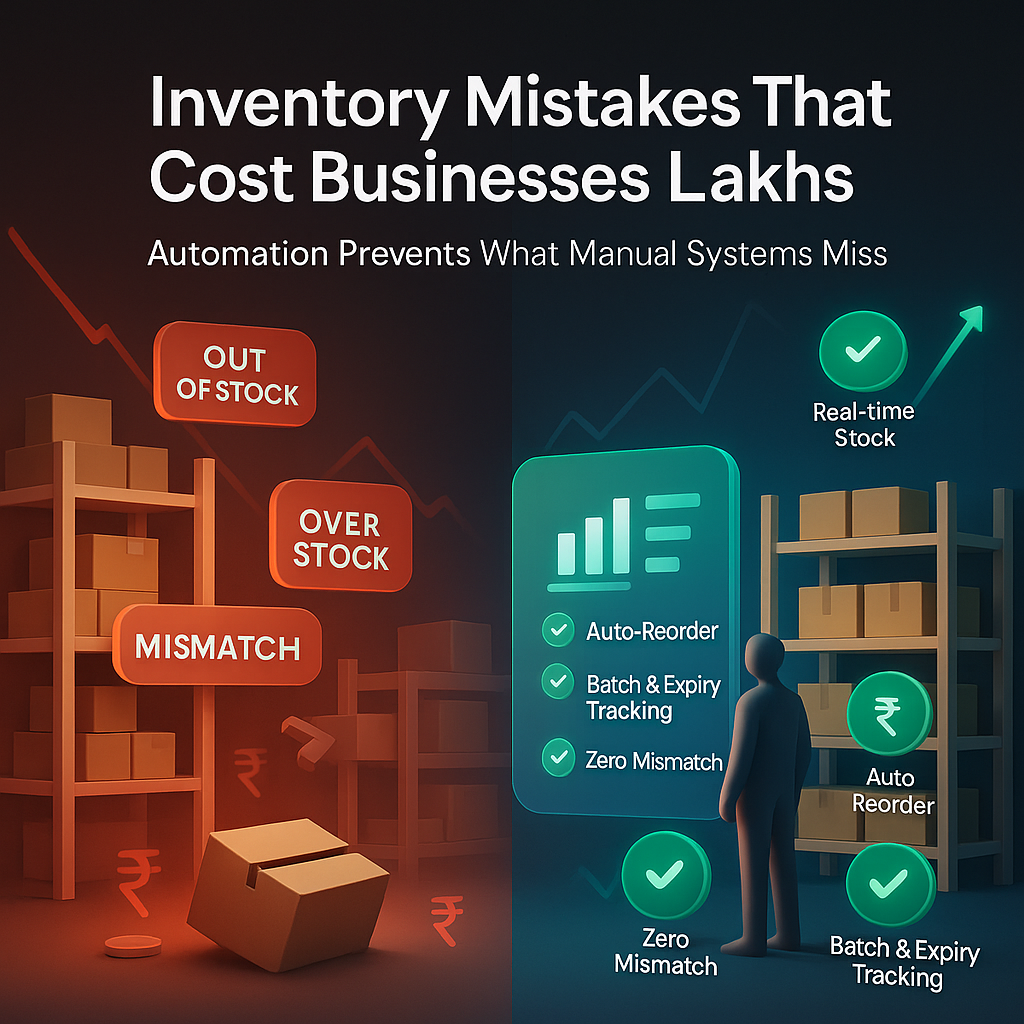
In this guide, you’ll learn the top inventory mistakes Indian SMEs make and how automation eliminates them completely.
1. Inaccurate Stock Counts — The Root Cause of All Inventory Problems
If your physical stock never matches your digital records, you’re losing money every single day.
Manual updates always result in:
❌ mismatches
❌ incomplete counts
❌ incorrect stock levels
❌ missing items
❌ over-ordering or under-ordering
Why this happens:
- Manual entry errors
- Missed updates during busy operations
- Stock not recorded immediately
- Different people managing different files
- No real-time syncing
How automation fixes this:
✔ Every sale, purchase, or transfer updates stock automatically
✔ Zero manual entry required
✔ System-generated stock accuracy
✔ Real-time dashboards
In 2026, real-time inventory accuracy is a competitive superpower.
2. No Real-Time Visibility Across Multiple Locations
If you operate multiple warehouses, stores, or branches, manual processes create chaos:
❌ delays in checking availability
❌ confusion between teams
❌ missed orders
❌ uneven stock distribution
This leads to stockouts in one location while another sits with excess inventory.
Automation enables:
✔ Real-time stock visibility across all branches
✔ Centralized dashboard
✔ Auto-transfer recommendations
✔ Role-based access for teams
For multi-location businesses, real-time inventory visibility is not optional — it’s survival.
3. Overstocking — Money Is Sitting on Shelves Instead of the Bank
Over-purchasing “just in case” creates massive financial pressure.
Overstocking causes:
❌ blocked working capital
❌ dead stock
❌ expiry/wastage losses
❌ increased storage costs
❌ reduced business liquidity
Automation prevents this by:
✔ forecasting demand
✔ identifying slow-moving items
✔ analysing purchase history
✔ suggesting optimal reorder quantities
In 2026, businesses must buy based on data, not assumptions.
4. Frequent Stockouts — Losing Customers and Revenue
A stockout at the wrong time can cost you customers permanently.
Stockouts cause:
- cancelled orders
- customer frustration
- negative reviews
- emergency procurement costs
- lost revenue
Why stockouts happen manually:
❌ No real-time tracking
❌ No low-stock alerts
❌ Missed reorder points
❌ Poor demand estimation
Automation fixes this with:
✔ smart low-stock alerts
✔ automatic reorder recommendations
✔ supplier lead-time tracking
✔ predictive demand forecasting
In 2026’s fast-delivery era, customers will not wait.
Automation ensures your shelves never run empty.
5. Poor SKU-Level Tracking
Businesses with large SKU ranges struggle with:
- variants
- batches
- expiry dates
- supplier details
- manufacturing dates
This is especially costly for FMCG, pharma, retail, packaging, and manufacturing industries.
Automation provides:
✔ SKU-level traceability
✔ expiry & batch management
✔ controlled issuance
✔ production tracking
✔ alerts for nearing expiry
SKU intelligence reduces waste and improves profitability.
6. Manual Purchase Planning = Guaranteed Money Loss
When purchase teams operate without data, they buy too much or too little.
Manual purchasing issues:
❌ no visibility of past consumption
❌ no supplier performance metrics
❌ inconsistent reorder cycles
❌ reactive buying
❌ no forecasting
Automation fixes this with:
✔ data-driven purchase planning
✔ consumption & trend analysis
✔ supplier comparison
✔ reorder algorithms
✔ predictive analytics
With automated planning, SMEs buy smarter and save big.
7. Lack of Integration Between Inventory & Sales Systems
Most inventory mistakes happen because sales and stock are not synced.
If sales teams sell items that aren’t actually in stock:
❌ orders get cancelled
❌ customers lose trust
❌ delivery delays increase
❌ operations get chaotic
Automation synchronizes:
✔ sales orders
✔ dispatch
✔ returns
✔ stock movement
✔ purchase updates
Everyone sees the same inventory in real time — no surprises.
8. No Tracking of Wastage, Damage, or Theft
SMEs lose lakhs every year due to unnoticed:
- expired stock
- damaged goods
- unrecorded returns
- pilferage
- wastage
Manual systems make these losses invisible.
Automation ensures:
✔ wastage logs
✔ expiry alerts
✔ batch-wise tracking
✔ damage documentation
✔ user permissions and audit logs
Nothing disappears without a record.
Nothing is lost without accountability.
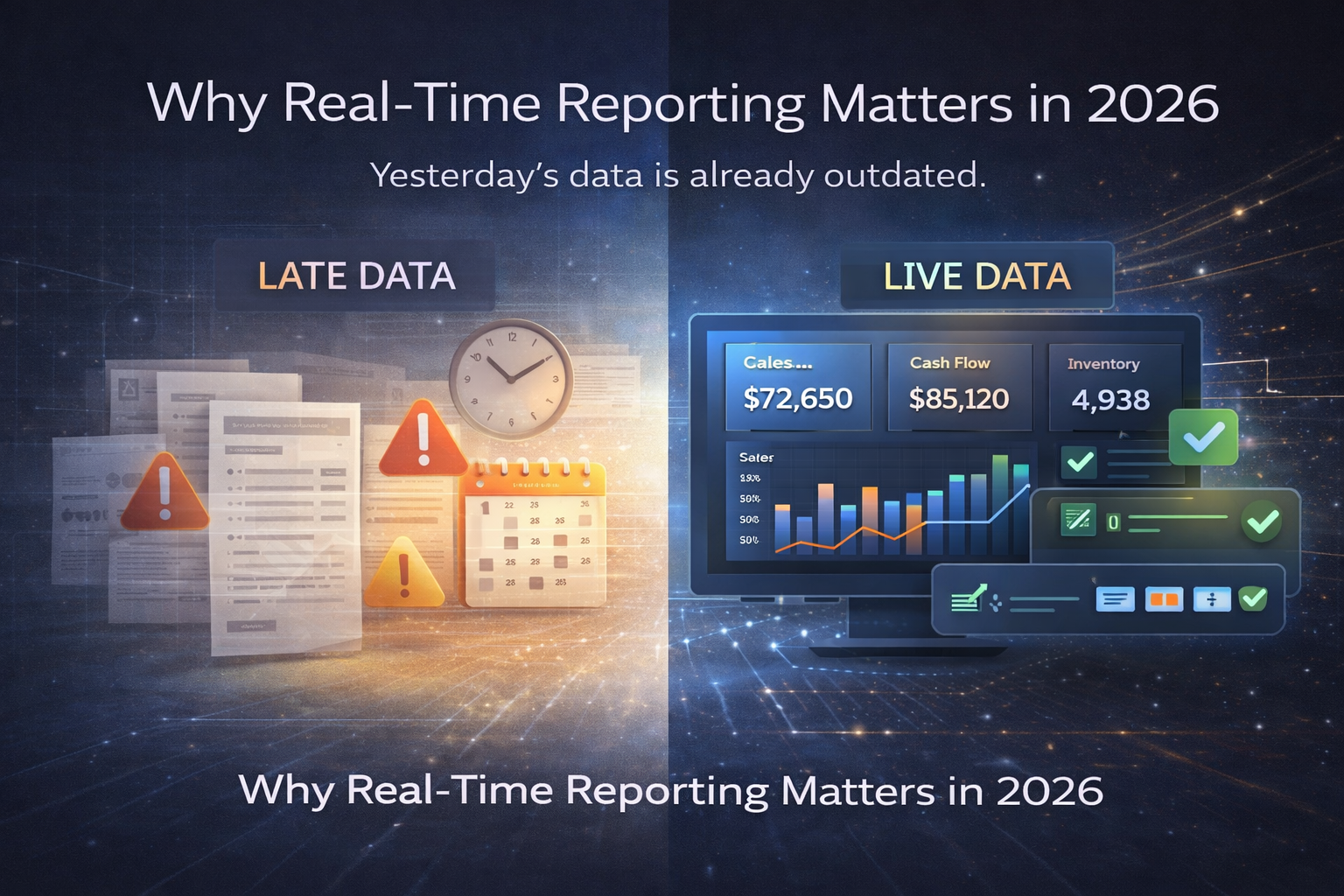
9. Slow Reporting — Decisions Come Too Late
If your inventory reports take hours or days to prepare, your decisions are already late.
Manual reporting causes:
❌ delays
❌ multiple revisions
❌ inaccurate valuation
❌ poor planning
Automation gives:
✔ daily stock summaries
✔ valuation reports
✔ profitability analysis
✔ fast-moving vs slow-moving insights
✔ reorder reports
✔ real-time dashboards
In 2026, leaders need insights instantly — not after the damage is done.
10. High Dependency on One or Two Key People
If your inventory knowledge lives only with:
- warehouse manager
- store in-charge
- senior operations staff
…your business is at serious risk.
When that person takes leave, inventory collapses.
Automation eliminates this dependency:
✔ standardized workflows
✔ role-based access
✔ centralized data
✔ documented processes
✔ automated logs
Your operations become system-driven, not person-dependent.
Conclusion: Inventory Automation Is No Longer Optional in 2026
Inventory automation is not a luxury — it is a survival requirement.
Businesses that automate in 2026 will enjoy:
✔ higher profitability
✔ accurate stock visibility
✔ faster fulfillment
✔ smart forecasting
✔ reduced wastage
✔ better cash flow
✔ happier customers
Businesses that don’t will suffer:
❌ losses
❌ inefficiencies
❌ stockouts
❌ shrinking margins
❌ operational chaos
The winners of 2026 will be the ones who manage inventory in real time.
🚀 Averiq Solutions — Intelligent Inventory Automation for 2026
Averiq’s advanced inventory automation system helps SMEs eliminate losses and gain full control through:
- Real-time stock tracking
- Multi-location visibility
- Smart reordering
- Batch & expiry management
- Purchase planning intelligence
- Sales & ERP integration
- Wastage & damage tracking
- Automated reporting
👉 Book a free demo and see how inventory automation can save your business lakhs in 2026.